A landscape image of a Hymer Vemture S van parked in a scenic outdoor area with mountains in the background.

The digital-first recreational vehicle: Hymer

Enjoy the great outdoors and explore off-the-beat locations without having to give up creature comforts that sums up van life, better known on social media as #vanlife. For some it's a form of recreation, for others a lifestyle driven by the minimalist and mobile work trends.

Hymer designs and manufactures camper vans and motorhomes for all needs. For its new flagship Venture S camper van, Hymer used Siemens Xcelerator software portfolio elements including Solid Edge and NX.

On the inside, Hymer's Venture S camper is setting standards in the van segment: a built-in workstation for working and conducting virtual meetings; a spacious rain shower; clever storage compartments for everything from pots and pans to shoes and jackets; and a retractable projector that lets you beam your favorite movies onto a pull-down screen.

Venture S doesn't disappoint on the outside either, with a terrace-like back door, or with temperature-regulating, energy-efficient body work that reduces the surface temperature of the vehicle.

With solar panels and the use of sustainable materials such as felt and bamboo for the interior, Venture S is right on trend and in multiple ways as flexible as the consumer expects a mobile home to be.
Fully digitalized product creation

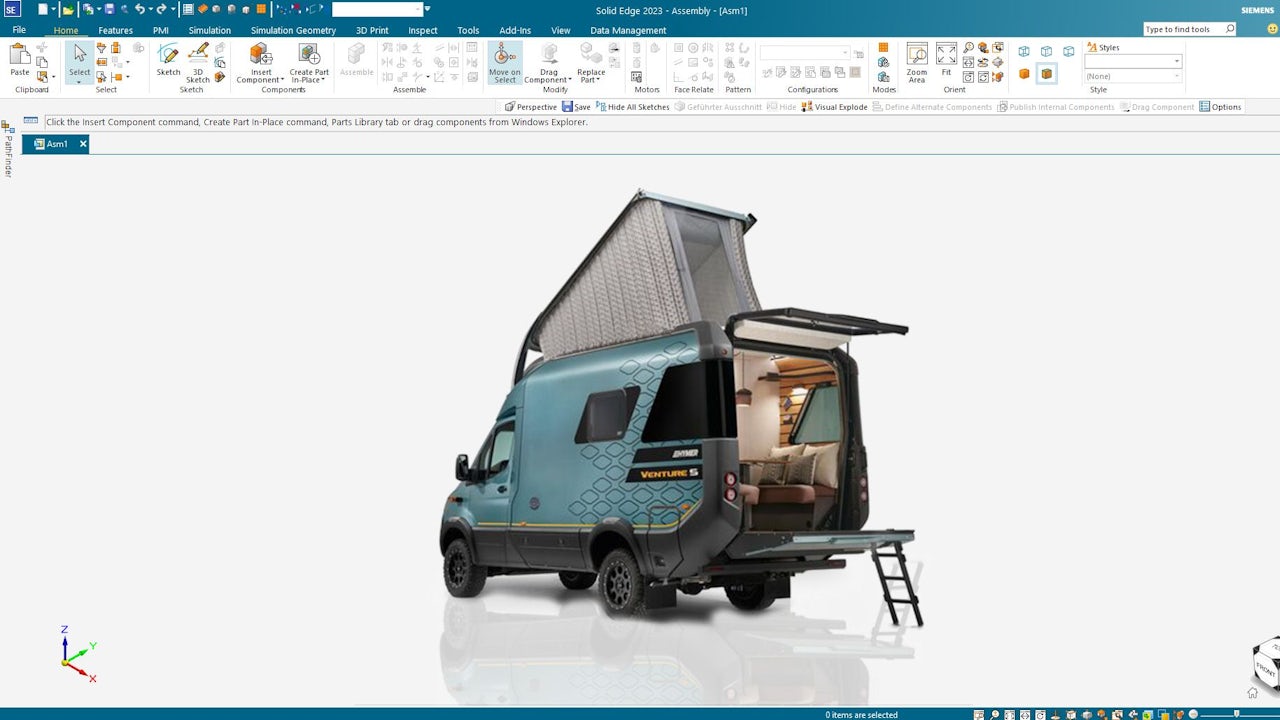
For computer-aided design (CAD), Hymer engineers in all European locations use Solid Edge software. "Solid Edge has a supportive user interface, so it is easy to learn; new colleagues only require minimal training," says Stefan Ziegler, head of Industrialization Research and Development (R&D) at Hymer.

The 3D CAD software has everything needed to create a comprehensive digital twin of the vehicles. This is especially valuable for complex tasks like routing piping and tubing — whether it is for gas, water, or wastewater — in very tight spaces. At this stage, Solid Edge XpresRoute 3D is employed. Later, in manufacturing, the 3D models make it easier for production staff to know where to install the pipework and tubing.

Hymer engineers in all European locations use Solid Edge for CAD. Copyright: Hymer GmbH & Co. KG.
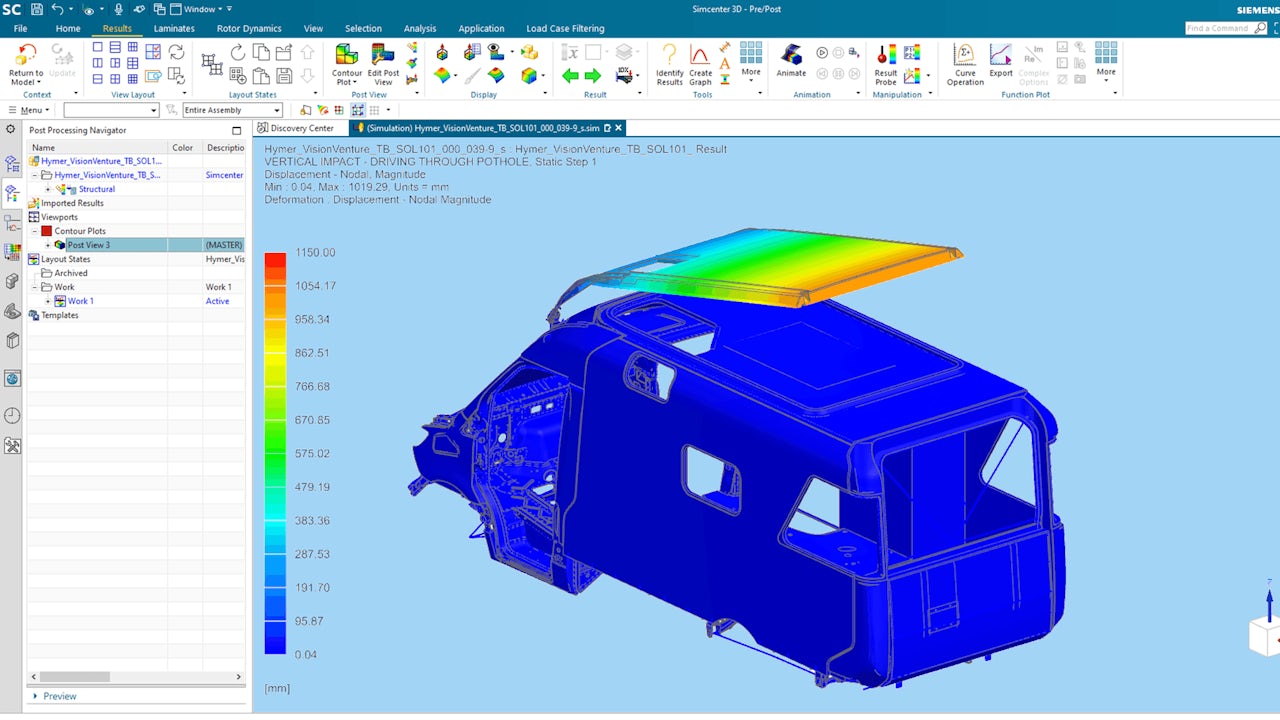
A diagram of a dark blue van shows how design engineers use the FEM capabilities of Solid Edge to verify the structural integrity of their designs for everyday basic verifications and outsource more in-depth stress analyses to a specialized internal department in EHG (The Team Technology; TTT) using Simcenter 3D. Copyright: Hymer GmbH & Co. KG.

The design engineers verify the structural integrity of their designs using finite element modeling (FEM) analyses embedded in Solid Edge. These everyday basic verifications are easy to execute and already deliver some good first sight on structural data.

More in-depth stress analyses are outsourced to The Team Technology (TTT), an internal automotive lightweight construction department within the Erwin Hymer Group. They use Simcenter 3D software for FEM analysis.

This two-stage verification process establishes a knowledge gain during the early phases of product design, reducing the number of physical prototypes required.

Simcenter is also capable of more. As a modular software solution, Simcenter has components for every engineering and design task. Ria Kaiser, head of Lightweight Design and New Materials in Erwin Hymer Group's TTT, is currently exploring possibilities to employ Simcenter FLOEFD for testing the aerodynamic shape of different components.

"A major advantage is that our engineers don't need to get used to a new interface," she says. "That keeps the learning curve to a minimum and lets them produce results faster."

Virtual prototyping

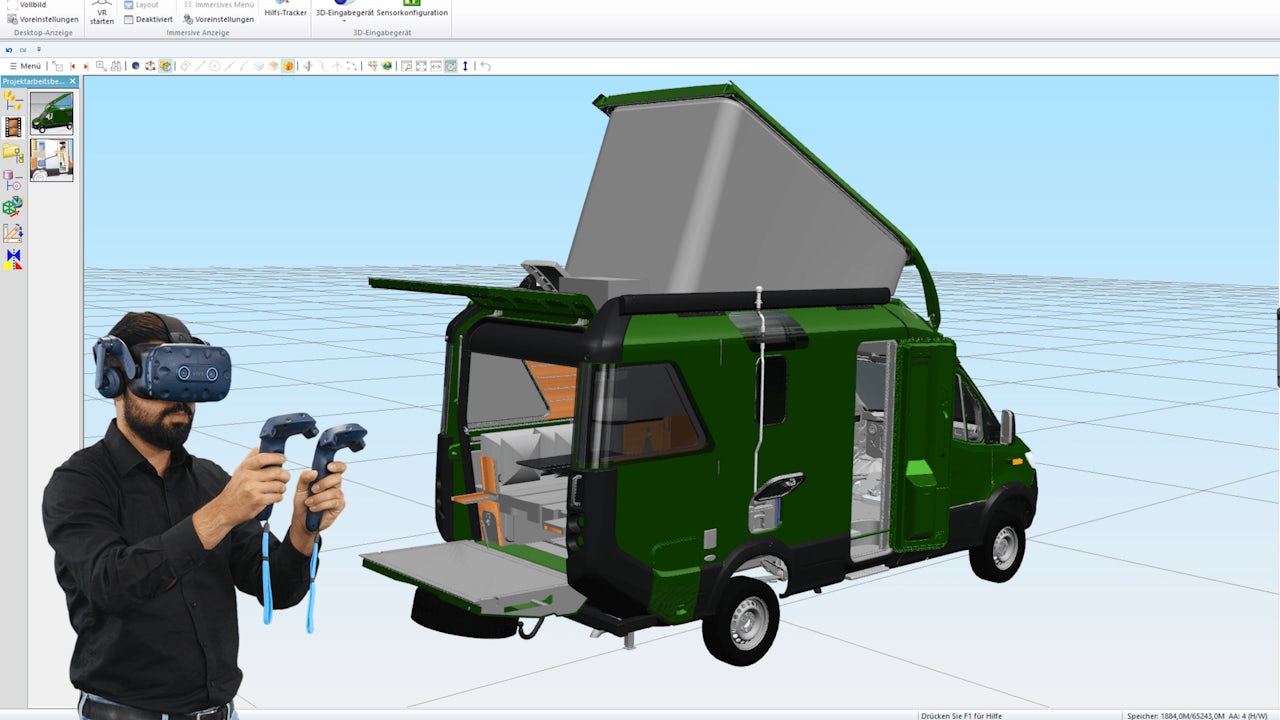
Hymer uses Siemens software also to build and evaluate prototypes of their vehicles in virtual reality (VR). To do so, the camper van experts import the digital twin created with Solid Edge and build digital mockups of the entire vehicle or a part of it. Virtual prototyping helps Hymer reduce physical mockups and prototypes significantly.

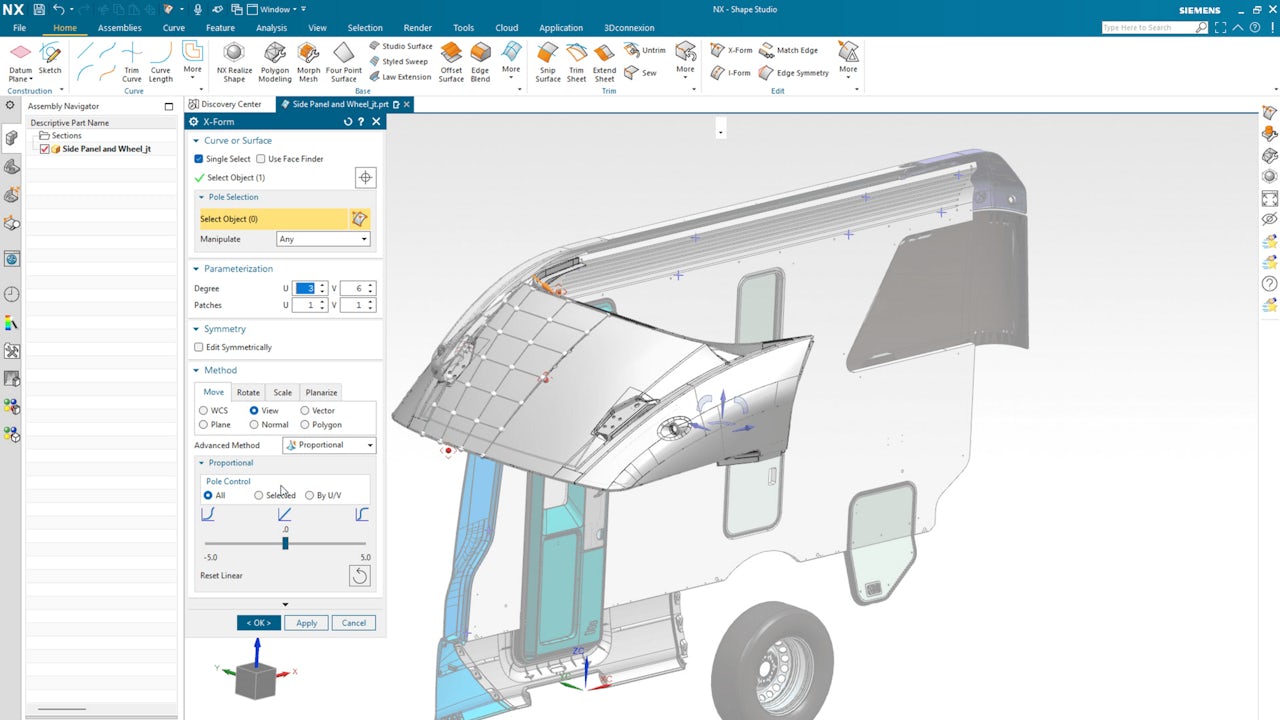
"Our products like Venture S have become so complex that traditional 2D models just aren't enough. The 3D models made possible with Siemens software are vital for detecting and resolving issues in our designs before they become costly problems," says Stefan Ziegler. An essential tool to create the most realistic 3D models possible is NX, which is particularly adept at defining complex surfaces.

In the area of surface modelling and freeform surfaces, Hymer works with Siemens NX. (Copyright: Hymer GmbH & Co. KG.
A man wears virtual reality headgear to design a van. Copyright: Hymer GmbH & Co. KG.

Examples here include ergonomic design verification using VR gear to reveal if the solutions are practical, and augmented reality (AR) to check the correctness of data as early as the prototype construction stage.

In the future, AR capabilities can be also used to support maintenance or improve customer usability. In a recent Hackathon with Technical University of Munich (TUM), students developed a first app prototype with the help of the Siemens low code platform Mendix to create an interactive user manual that could also benefit from AR features.

With the help of VR technologies, not only can onsite staff in production better visualize technical instructions but customers' or vendors' interiors can be experienced vividly, even when geographically dispersed.

"A digital prototype also brings decisive advantages for marketing," says Frank Heinrichsen, head of Marketing at Hymer GmbH & Co. KG.

The detailed digital twin of the Venture S allowed the marketing team at Hymer to create communications materials complete with photos and videos – even before the first physical prototype was built.

Similarly, Hymer also used the digital twin to initiate training for its production and retail operations – again, without a physical vehicle.

Bringing the digital twin alive

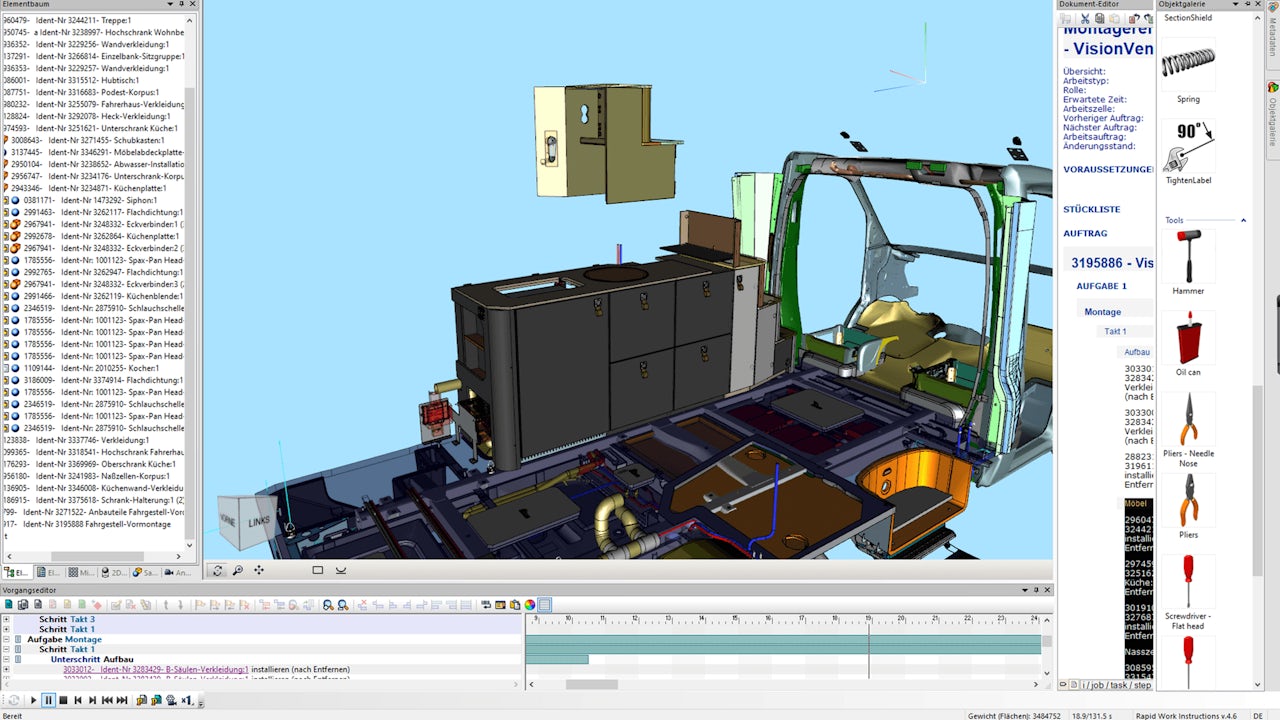
After the design for Venture S was set, Hymer's engineers used RapidAuthor for Teamcenter to create all documentation for manufacturing. In particular, the system creates electronic instructions for the shopfloor staff at the company’s assembly lines in Bad Waldsee, Germany.

"Workers are enthusiastic about the dynamic assembly notifications being used in the 3D models," says Stefan Ziegler. "They particularly like the ability to turn models to better see things that are often hidden in the drawings."

Having a single master digital twin is also particularly helpful when a product comes in different configurations as Hymer camper vans and motorhomes often do. That’s why the basic design prototype contains all possible variations, the so-called 150% model.

When a customer places an order, the respective configuration can be selected with just a few clicks. Hymer engineers have also recently started enriching their models with product and manufacturing information (PMI).

"Using PMI has turned deriving individual variants into configuration," Stefan Ziegler confirms. "It has reduced the time required significantly."

This screenshot shows how Hymer engineers use Rapid Author for Teamcenter to create electronic instructions for assembly lines. Copyright: Hymer GmbH & Co. KG.

Goodbye to information silos

Using the digital twin created in Solid Edge as the single source of truth for all these purposes enables all data to be both ubiquitous and associative. This has allowed Hymer to eliminate distributed information silos and some notorious sources of error associated with data separation.

Additionally, after modifications, everyone involved can immediately resume work on the basis of valid, up-to-date information. The Venture S defines a completely new category of vehicle. With the Venture S camper van,

Hymer is showing how the company imagines and defines mobile travel, van life and flexible working today. From solar panels, over sun deck, expandable shower, removable lamps, cloud-enabled heating control and a foldable desk, users are gaining the benefits of the digital strategy that had brought the Venture S to life.

June 2023
Contact: Susann Kunz
Editorial team: Industry Stories

About Hymer

Located in Bad Waldsee, Germany, Hymer GmbH & Co KG, is a recreational vehicle pioneer, producing its first caravan trailer in 1957 and the first German motorhome in 1961.

Part of the Erwin Hymer Group, Hymer also designs and manufactures trailers under the Eriba brand. The Erwin Hymer Group belongs to the Thor Industries family of companies, uniting a majority of European and North American RV manufacturers.