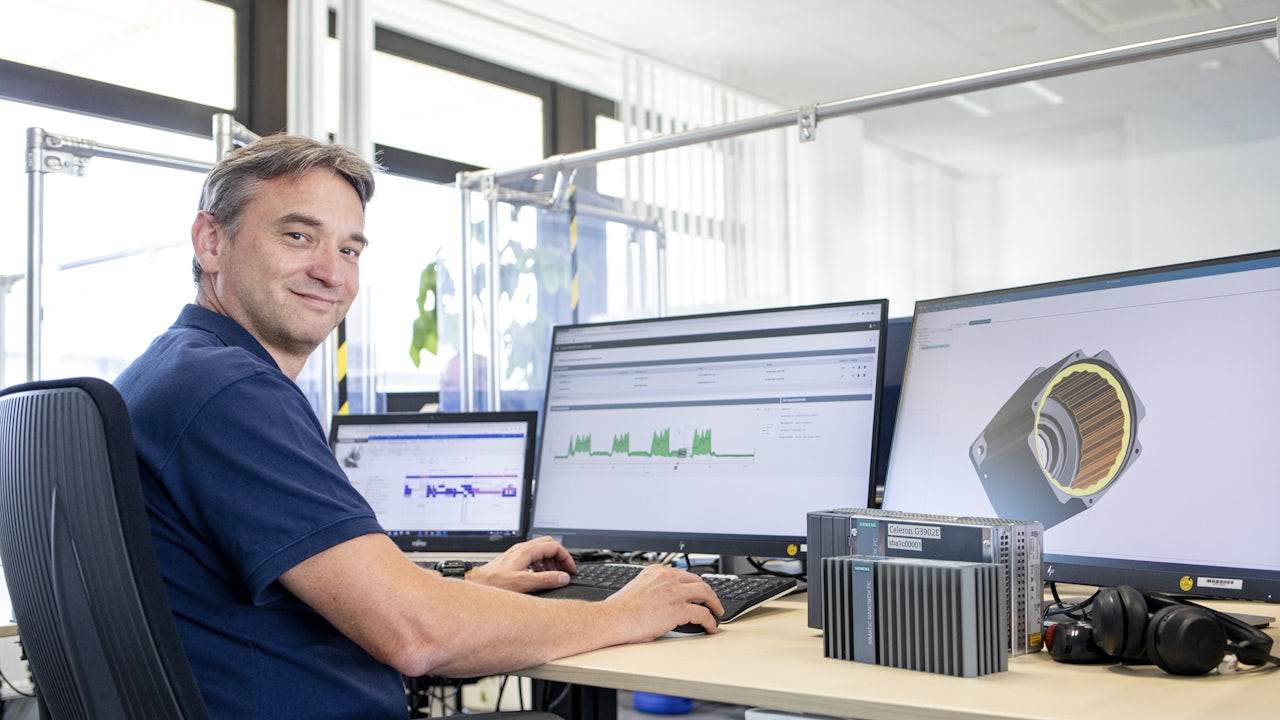
A person is standing in front of a Siemens building with a Siemens logo on the wall.

IT/OT convergence turbocharges motor production

Siemens Electric Motor Factory in Bad Neustadt, Germany is becoming a sustainable digital enterprise step-by-step, automating, digitalizing, integrating legacy equipment, and converging IT/OT for a data-driven factory of the future.

Behind the doors of the Siemens Electric Motor Factory in Bad Neustadt, a digital revolution is underway. Within the past several years, the 87-year old factory has advanced from manual assembly to 21st century digital manufacturing.

The journey was not completed in a single leap, however; it took incremental steps for the plant to be where it is today. Having exhausted traditional productivity measures, the facility that churns out 500,000 make-to-order products every year first turned to digitalization and automation to further enhance operations. The path continued to IT/OT integration, lined with solutions that stem from within Siemens itself.

Video “Use case IT OT integration Bad Neustadt”

Use cases lead the way

A golden retriever puppy sits on grass, looking up with bright eyes and a curious expression.

At the Siemens Electric Motor Factory, “we have the responsibility to develop and test systems for our own factories,” says Head of Innovation and Digitalization Peter Zech.

"Our long-term strategy is the data driven factory”, says Peter Zech, Head of Innovation and Digitalization of the Bad Neustadt factory. To make this strategy reality the factory focusses on use cases from the shopfloor, since they solve problems, generate productivity and gives the underlying technology a purpose.

The very first use case – machine performance – led to a consolidation of the machine park with savings in space and maintenance cost. Another use case was energy management, which generates the transparency to identify potentials for energy saving, like automated hibernation and weekend shutdowns. Only two examples of many use cases: “We standardize our use cases in a so-called use repository. This repository already contains use cases like Digital Gemba Walk, Shopfloor Quality Reporting and many more. But we also see further use-cases that are based on IoT Data and the linkage and correlation of IT and OT data,” Peter Zech continues.

Harnessing IIoT, IT/OT, ERP and MES

“Our high-variant production factory is our daily challenge,” explains Peter Zech. For a plant that produces 30,000 different variations a year and changes the process every seven minutes, coupling OT and IT data is crucial. “You really increase the value of the data by linking it to individual motors or components.”

“We began with connecting machines that utilize OT data,” Peter Zech continues. OT data from factory equipment, sensors, controllers, end-of-line tests, and quality assurance are all collected in our own Siemens cloud solution Insights Hub,.

Interfaces to the enterprise resource planning (ERP) and manufacturing execution system (MES) make it possible to store, process and analyze all the data. Traceability data from the MES allows to link test results from specific components to test results in the final product or motor, for example. This enables advanced use cases like data supported root cause analyze or decision making.

Data-driven insights lead to more insights on efficiency

The “reduced test effort” case, aimed at minimizing product testing at the final stages of production without sacrificing quality – is one example of optimization driven by IT/OT integration. The algorithm combines historic data with real-time factory information to define and apply rules whether a specific test step can be skipped. It led to a significant decrease in effort for these specific test steps, saving time and money.

A golden retriever puppy sitting on grass, looking up with a curious expression.

The Electric Motor Factory Bad Neustadt tackles its heterogenous OT environment with the help of IT.

Becoming a factory of the future

Though much has been achieved, the IT/OT journey is not yet at an end. The ultimate goal: a data-driven factory, with automated data collection, autonomous material transport, and AI applications.

“We have the right team, the right technologies, the right partners and a lot of ideas to make our vision of a data driven factory real.” adds Peter Zech. Equipped with high quality data, a robust ecosystem, and end users and experts who push them forward, the Siemens Factory in Bad Neustadt is marching steadily towards a smarter and more flexible future.

January 2025

Siemens Electric Motor Factory in Bad Neustadt, Germany

The Siemens Elektromotorenwerk, or the Siemens Electric Motor Factory in Bad Neustadt and der Saale, Germany produces multi-axis electric motors for motion control (MC) drive systems. More than 600,000 motors in 30,000 different types – including servo motors, main motors, linear motors and torque motors – are manufactured there every year. They are used in various industries where precise motion control is essential, including manufacturing, robotics, and automation.

Aerial view of a large circular arena or stadium with a distinctive roof structure surrounded by parking lots and roads.

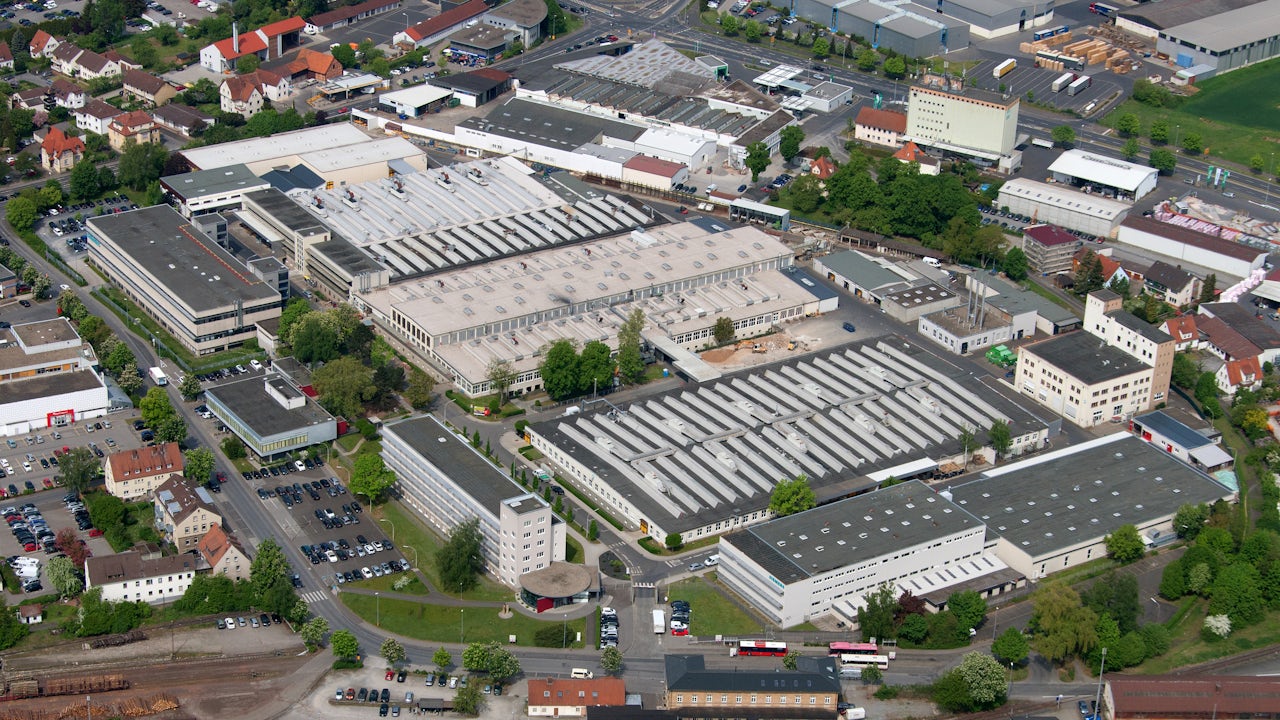
Siemens’Electric Motor Factory Bad Neustadt, Germany

Subscribe to our LinkedIn newsletter, Discover Digitalization

Our LinkedIn newsletter for industry decision makers contains a broad variety of topics, including the Industrial Metaverse, Digital Twins, IT/OT Convergence, Artificial Intelligence, Cybersecurity, and more. In each of our issues, we share stories of digital transformations and give you premium insights on how to become a sustainable Digital Enterprise.