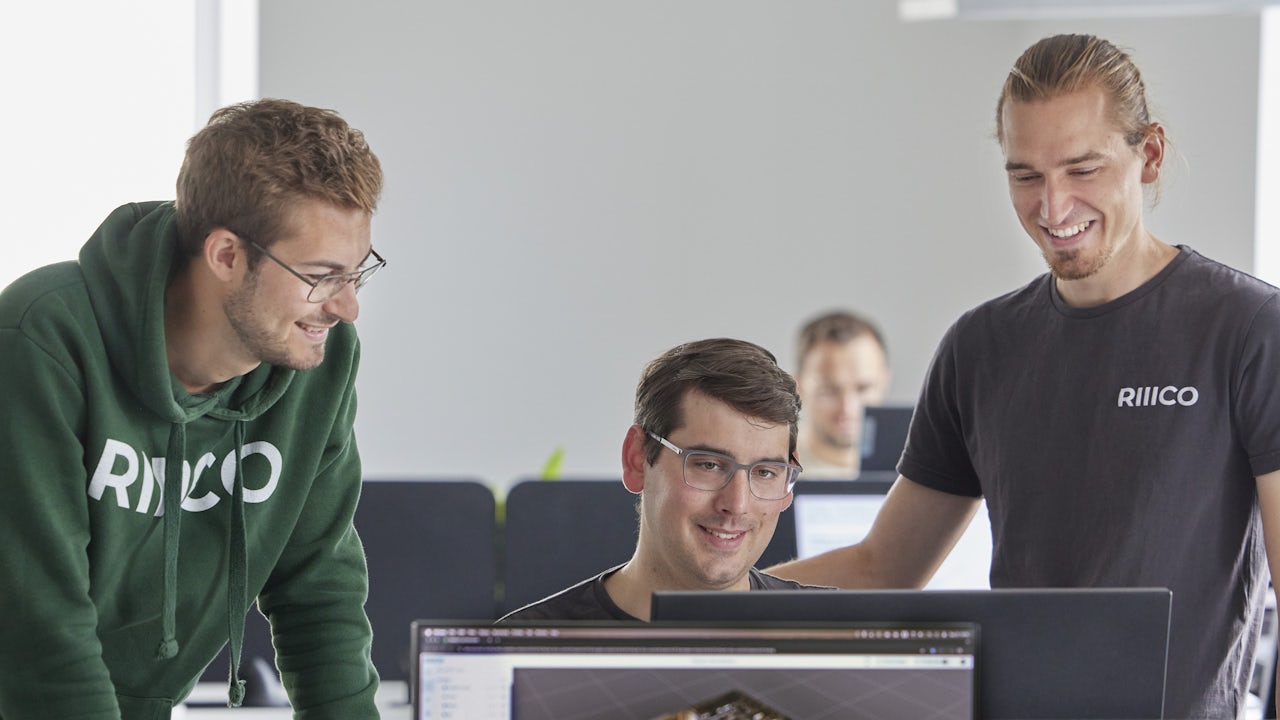
Industrial Metaverse in plant design
Jan Büchsenschütz | Siemens Inventors of the Year | Open Innovation
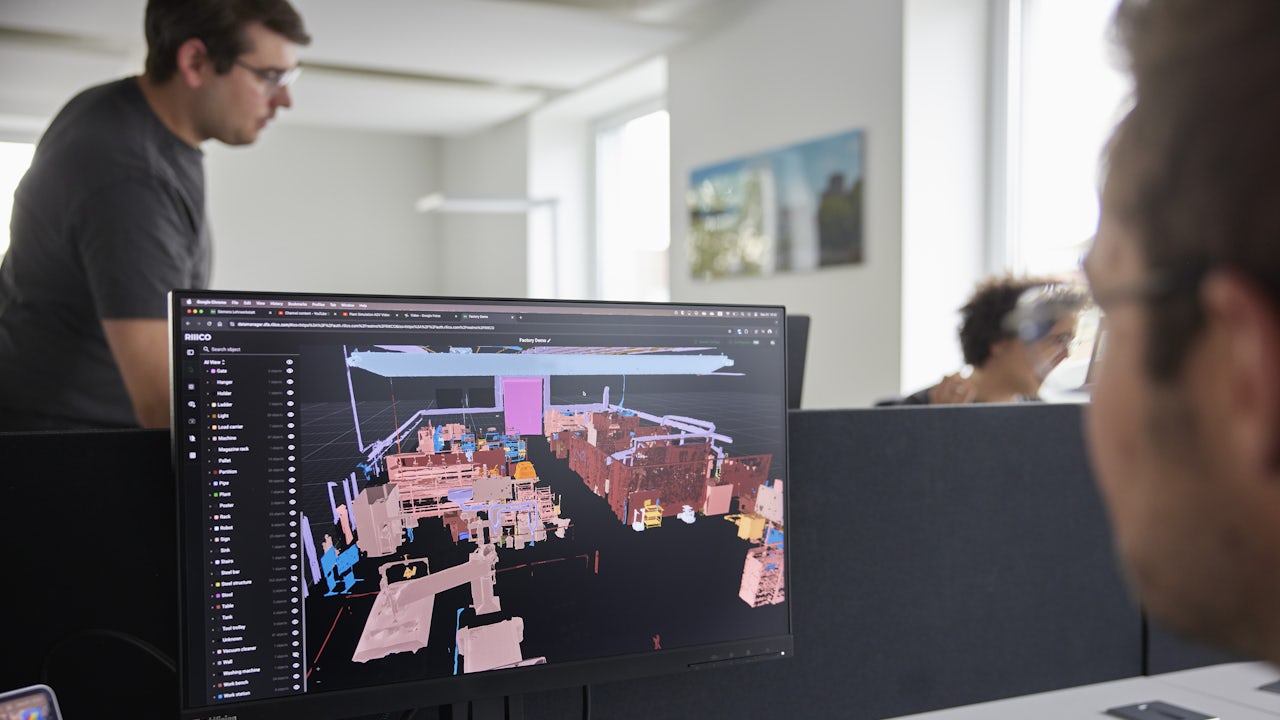
When people look around a room, they usually recognize various individual objects in their surroundings without no problems. For example, there’s a cup on the table, a picture hanging on the wall, and a dog sleeping in the corner. “For computers, three-dimensional images, or point clouds – 3D images from laser measuring devices – are initially just a lot of 'pixels in space' with no other meaning,” explains Jan Büchsenschütz from RIIICO GmbH in Düsseldorf, Inventor of the Year 2024 in the Open Innovation category. “At RIIICO, we developed a process that uses artificial intelligence to automatically understand what can be seen in a point cloud.”
3D models of industrial plants
This enables RIIICO to provide its customers like Siemens and car manufacturers like Volvo with three-dimensional models of industrial plants in CAD (computer-aided design) format in the shortest possible time and in an automated process. The models show in detail what’s located where in the plant, including the location of windows and doors, tables, and machines. With these models, which accurately reflect reality, customers can continue working: for example, removing or moving walls and furnishings in the virtual world with a single click and setting up new configurations. Welcome to the Industrial Metaverse.
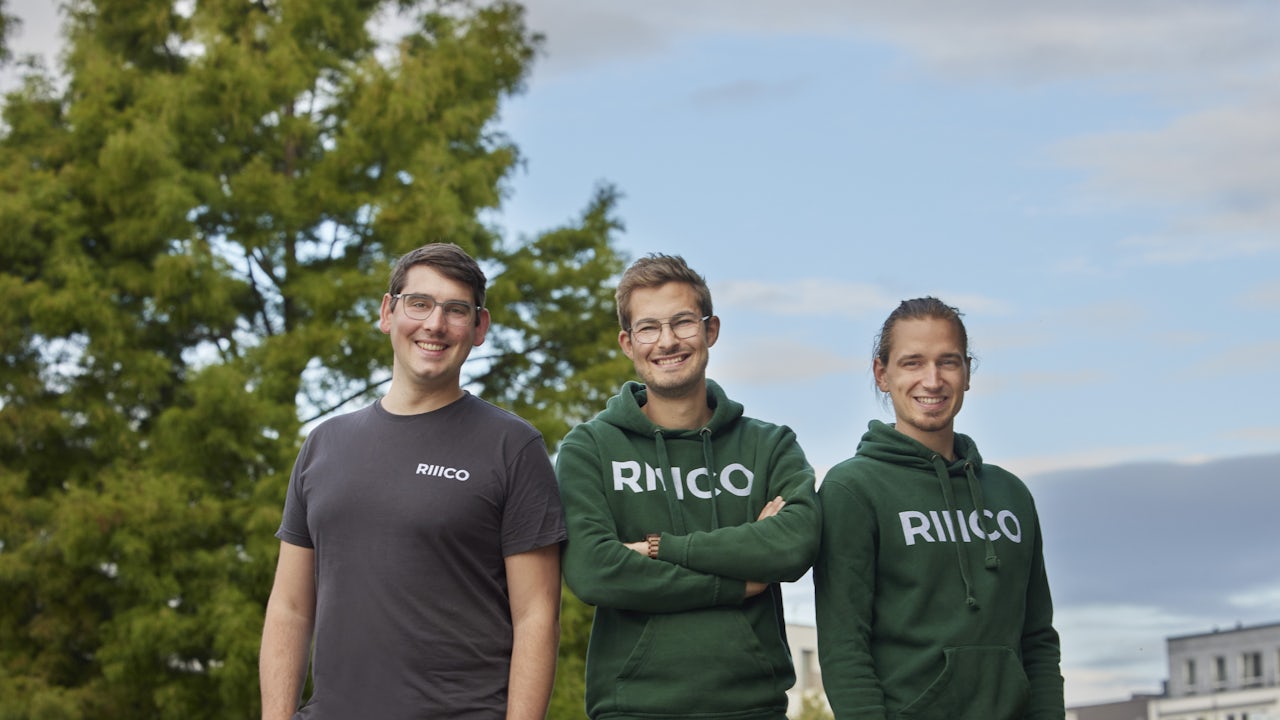
Expert in industrial plants
However, creating point clouds is almost as easy as taking photographs. With the right measuring equipment, Jan estimates that a 10,000-square-meter plant can be captured with millimeter precision within a day. “From this point cloud, our AI recognizes the building infrastructure, like walls, floors, and the ceiling between intermediate levels,” Jan explains. “And we’ve trained it to recognize technical building equipment in particular, including cable routes, pipes, and steel beams on the ceiling. Or the equipment on the floor, like machines, load carriers, racks, and pallets: In other words, everything that can ultimately be moved when a factory needs to be rescheduled. We can map most industrial plants directly as CAD models. Only in special use cases with special objects do we have to retrain the AI so that these objects are also recognized.”
Startup with good Siemens contacts
Jan accepts the Inventor award on behalf of the whole RIIICO team. He and the two co-founders Felix Fink and Patrick Mertens are former students of RWTH Aachen University, one of Siemens’ partner universities. They had already developed their business idea as students and were able to benefit from the exchange with experts in the Siemens Research & Innovation Ecosystem Aachen Arc around the universities in Aachen, Leuven and Eindhoven, as well as from the Excellence Startup Centre NRW at the university in Aachen. They finally founded their startup company in 2021. “Siemens was our first customer back then, when there were only three of us,” Jan recalls. “Since then, we've grown a lot and are now a dynamic international startup with 24 employees from eight countries.”