
Carbon footprint: automated and accurate
How much CO2 is emitted during the production of a drone or a car? Siemens has developed a carbon footprint management solution that answers this question.
Drive sustainable manufacturing
Full-scale IT system integration was successfully deployed with partner NTT DATA at the Swiss Smart Factory, a lighthouse project of the Switzerland Innovation Park Biel. The solution is available on Siemens Xcelerator.
Price and performance have a major impact on the success of a product or service among customers.
A third factor may soon be added: the carbon footprint. At the moment, manufacturers have to go to great lengths to determine a product's carbon footprint.
One reason for this is that the lion's share of CO2 emissions is not produced by the factory where a product is assembled. Rather, the emissions are created in maze-like supply chains.
The job of determining the contribution that a few screws or a wrapping film make to the footprint is a laborious process. It takes even more work to turn this information into a data set.
Siemens SiGREEN
Siemens SiGREEN allows companies to request emission data from the supply chain and is already being used by many and across various industries. System integration, however, is still a challenge for many.
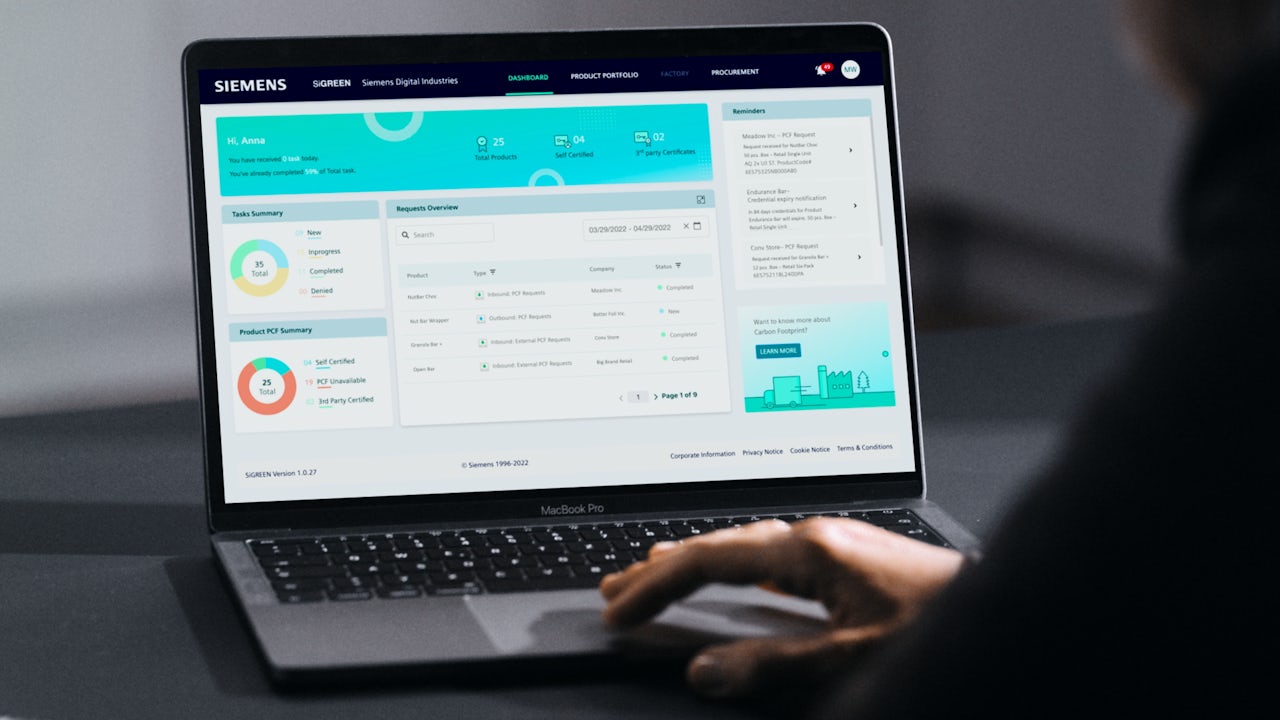
With SiGREEN it's possible to identify the carbon footprint of products and track when and where emissions occur along the supply chain.
Determining emissions data requires extensive information from various company systems. In order to gather it effectively and at scale, the operational technology (OT) on the shopfloor and IT systems can be connected to SiGREEN.
This is particularly necessary for companies that want to automate data flows between SiGREEN and their enterprise resource planning systems. Such connections require a high level of expertise in data integration. Qualified partners are needed to support customers globally in this process.
Determining emissions data requires extensive information from various company systems. In order to gather it effectively and at scale, the operational technology (OT) on the shopfloor and IT systems can be connected to SiGREEN.
This is particularly necessary for companies that want to automate data flows between SiGREEN and their ERP systems.
Such connections require a high level of expertise in data integration. Qualified partners are needed to support customers globally in this process.
A drone as a test object
A joint project that Siemens and NTT DATA conducted with the Switzerland Innovation Park Biel is designed to establish a partnership that simplifies IT system integration and scalable data flows for customers.
The Swiss Smart Factory, located in Biel, successfully demonstrated the integration in a real-use case. The test object is a drone that was assembled in the research factory.
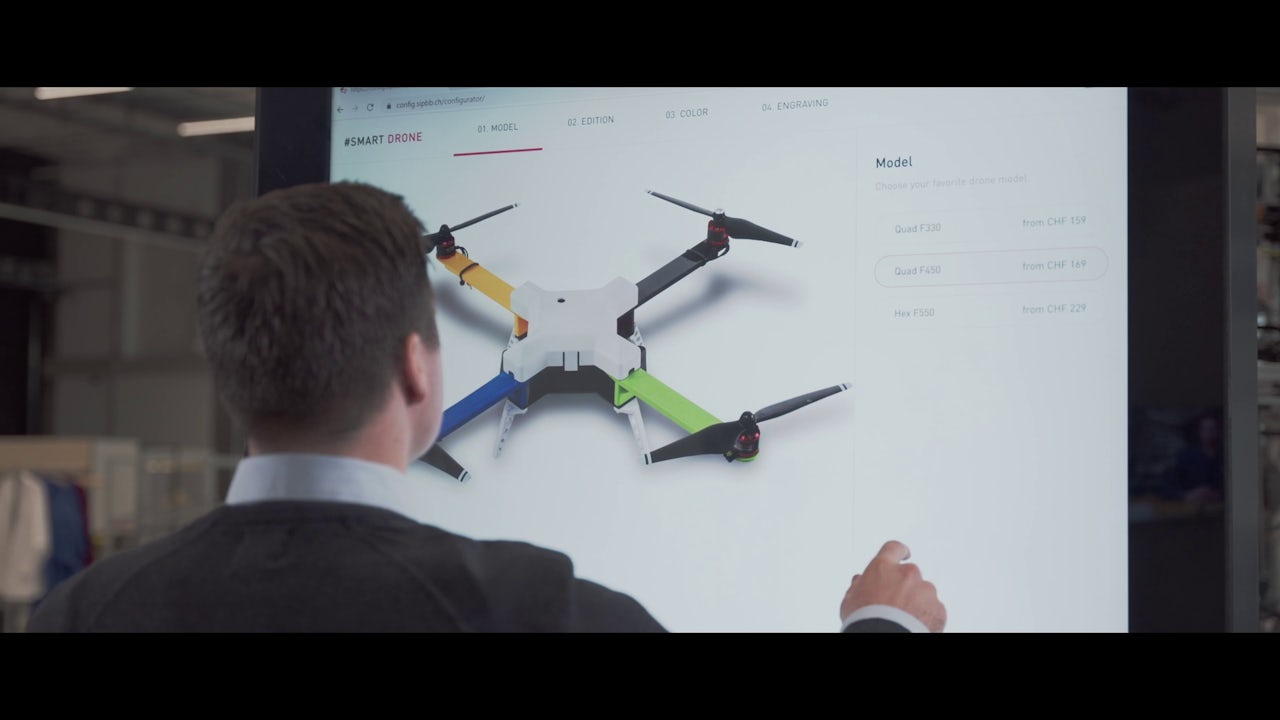
Data about CO2 emissions occurring throughout the entire value chain will be compiled via SiGREEN and included in the final footprint.
We can use this data to produce a CO2 certificate," Dominic Gorecky said. In the future, consumers will consider such information in their decision-making process, the Director of the Swiss Smart Factory says. The heart of the solution is a software offering called SiGREEN, a powerful tool created by Siemens to manage product carbon footprints.
"Our goal is to use primary data in our calculations of the main sources of emissions, that is,'real'information obtained from the supply chain.
Unlike other service providers, SiGREEN enables the customer and suppliers to share this data with each other," said Mario Fürst, the Country Program Manager for Switzerland at Siemens Xcelerator. Siemens is a long-time partner of the Switzerland Innovation Park.
About the right data flow
The third partner in this alliance is NTT DATA, a global IT consulting company that has been working with Switzerland Innovation Park Biel since 2018.
A large amount of information about components can be found in the ERP systems (enterprise resource planning) of a company and its suppliers.
One example is the specific volumes of material purchased from different suppliers. This process enables the factory to calculate the right percentage of CO2 emissions from components that contribute to the final drone’s product carbon footprint.
This facilitates the effortless exchange of carbon footprints via the value chain. "All of this is done automatically and creates a huge amount of added value for companies," says Thomas Plaß, Manager for Sustainability, Circular Economy & Compliance Consulting at NTT DATA.
This, in fact, is something new. Many companies are still inputting such information into Excel tables by hand.
The next step is to move from the showcase to a standard solution for companies – and this step leads through Siemens Xcelerator, Mario Fürst said. Xcelerator is the global hub that brings partners together.
Many companies have the same problem – "and Siemens Xcelerator provides them with an advanced solution that meets their needs," Fürst said. In addition to SiGREEN, other sustainability-management tools are available.
"We are happy to be part of Siemens Xcelerator," Dominic Gorecky says. His team has been thinking about ways that the findings of the partnership with Siemens and NTT DATA can be shared with potential users.
The result is an idea called Experience Journey that can be booked on the website of Switzerland Innovation Park. Visitors of its Swiss Smart Factory can watch live as a drone is assembled.
"Another station shows how the CO2 data in SiGREEN come together," Gorecky said. "By doing so, we help industry apply this solution and tap new business potential."