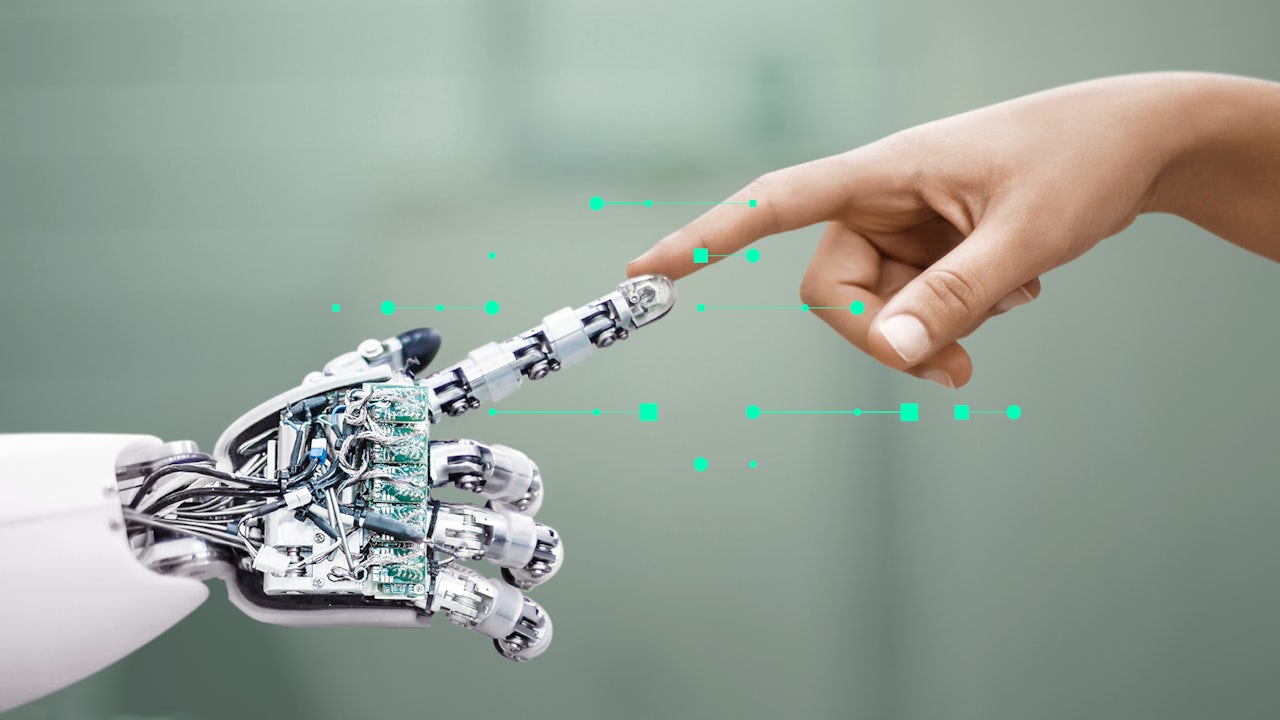
A robotic arm interacts with a server rack, with green digital lines and dots flowing between them, symbolizing data transfer.

Future of Automation

Whether it’s factories, buildings, process plants, or transportation systems, automation technology has always been the key driver of productivity. And the future of automation offers much more: The goal can be called “automating the automation.”

From mass production to flexible factories

Take the manufacturing domain as an example: The era when we had to choose between cheap, standardized, mass-produced products and customized, very expensive ones is nearly over. Production machines are very good at performing the same repetitive tasks at a high speed, but even today it’s still time-consuming for automation experts to reconfigure them.

Digitalization and the related emerging technologies – like artificial intelligence, the Industrial Internet of Things (IIoT), digital twins, edge, and the cloud – brought about a profound change and will enable the creation of a new class of more flexible and easy-to-use automation solutions with a significantly reduced engineering effort.

We are on the way to automate the automation

  • AI-enabled systems are aware of their environment. They’re capable of finding solutions autonomously without needing an expert to pre-configure them.
  • Using open, prefabricated (and pre-engineered) modularized units with integrated and autonomous automation (like manufacturing cells and process models) facilitates a “plug-and-operate” system and fast, flexible commissioning.
  • Augmented reality and smart operator assistants create new possibilities for virtual commissioning and support the collection of plant data in real time to provide information exactly where it’s needed.
  • In manufacturing processes, applying AI technologies in quality control can help identify error patterns even during operation, which saves money.
  • Sensor fusion technologies allow autonomous rail and road vehicles to navigate safely and efficiently.
  • Building automation systems can be installed and commissioned with no deep automation and programming knowledge.
Person in black shirt standing against white wall with black border, holding a dark object.

Siemens Core Technologies

Siemens strives for technological leadership in fields of technology and innovation that are of overriding importance to the company. These Core Technologies are crucial to long-term success of Siemens and its customers. Experts from the global research department of technology and the various businesses work together here, consolidating the company's R&D activities.